When a tank water heater dies, the replacement question is no longer automatic. Tankless heaters, which heat water only as you use it, have gone from exotic to ordinary, and a Mint Hill homeowner comparing quotes will face both options in the same conversation. Neither is the right answer for everyone. The honest comparison depends on your house, your habits and how long you plan to stay, not on which unit a showroom is pushing this month.
The two machines, side by side
| Question | Tank | Tankless |
|---|---|---|
| How it works | Keeps 40 to 50 gallons hot around the clock | Heats water on demand as it flows through |
| Typical service life | About 8 to 12 years | About 20 years with maintenance |
| Hot water limit | The tank: run it out and you wait | Flow rate: too many taps at once can stretch it |
| Energy pattern | Some heat is lost keeping water hot all day | No standby loss, but a bigger draw while running |
| Space | A closet or garage corner, floor-standing | Wall-mounted, frees the floor space |
| Upkeep | Flushing and anode rod checks | Annual descaling, especially with mineral-heavy water |
Where a tank still wins
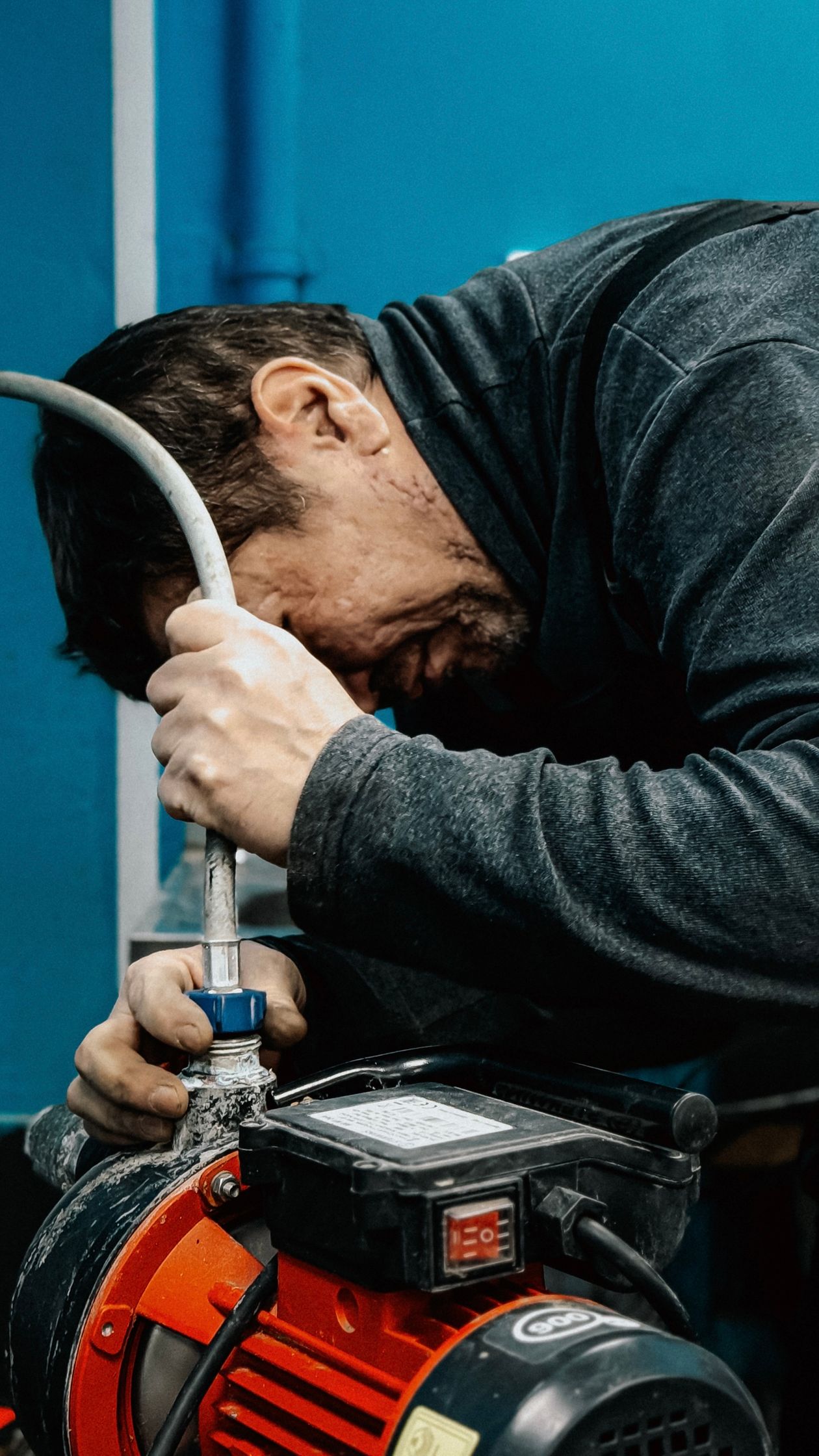
A tank heater is simple, proven and cheaper to install, often a like-for-like swap into the connections your house already has. For a household that uses hot water in predictable patterns, a family on a budget, or a homeowner planning to sell within a few years, the tank's lower upfront cost usually beats the tankless unit's long-life math. Tanks also handle the whole-house surge, two showers, a dishwasher and a washing machine at once, without complaint, as long as the stored gallons last.
Where tankless earns its keep
Tankless wins on time horizon and on pattern. A household that stays in the house a decade or more can use the unit's longer life. Families whose hot-water use is staggered rather than simultaneous, teenagers showering at midnight, a soaking tub filled on a Sunday, never drain a tank because there is no tank to drain. The wall-mounted footprint matters in smaller Mint Hill homes and townhomes where the water heater closet competes with storage. And no stored water means no tank to leak through a ceiling on a holiday weekend, a failure mode every plumber has a story about.
The installation fine print
Switching types is not a swap. A gas tankless unit may need a larger gas line and new venting; an electric one may need panel capacity your house does not have. Those upgrades are where quotes balloon, and they are legitimate costs, not padding. Get the quote with the conversion work itemized. A plumber like E.R. Services who installs both types has no reason to steer you, so ask the direct question: given this house and this panel, which would you put in your own home?
Running costs, honestly framed
Energy math gets oversold on both sides. A tank loses some heat around the clock, which is a real, steady waste; a tankless unit avoids that but works hard in bursts, and a gas model used by a large, shower-stacking family may not save what the brochure diagram suggests. Water habits decide the result. What is solid ground: tankless units last roughly twice as long, so their higher price is spread across about twenty years instead of ten, and a household that has been replacing tanks like clockwork feels that difference. Get both quotes with installation included, divide by the expected years of service, and the comparison turns from a sales argument into arithmetic you can check.
Whichever you choose, the install day is the moment to fix the small things around it: a drip pan and drain under a tank, an accessible shutoff, an expansion tank where code and pressure call for one, and the new unit's model and install date written in your house file. Those details cost little while a plumber is already standing there, and they decide whether the next decade of hot water is uneventful. Uneventful is the goal. The best water heater is the one you forget exists.
Common questions
Will a tankless heater lower my energy bills?
Usually somewhat, because it stops paying to keep water hot all day. The savings depend on usage; low-use households save proportionally more than high-use ones, and the payback period is measured in years.
Can a tankless unit run a whole house?
Yes, if it is sized for it. Sizing is about flow rate at peak moments, not gallons per day, which is why a proper quote starts with counting showers and appliances that run together.
What maintenance does a tankless heater need?
Annual descaling to clear mineral buildup from the heat exchanger, more important in hard-water areas. Skipping it is the main way tankless units die young.
Photos in this guide are representative stock images.
← All guides from E.R. Services← Back to E.R. Services